
The clinically intelligent RCM platform→

As demand on utilization management (UM) grows, health system leaders can support these teams with the same tool that helps optimize revenue cycle management — clinical AI. And, when applying an AI-first approach to UM, health systems create proactive processes where reactive reviews once stood.
Suddenly, the challenges below don’t just look manageable. They look beatable.
1
Leave less time for high-value review
2
Create gaps in institutional utilization management knowledge
3
Make it difficult to keep up with growing demands
Nationwide, a shortage of 158,000 RNs means most hospitals are short ~43 nurses.¹ The current 8.6% nursing vacancy rate is considered elevated.¹

To include more granular, diagnosis-related group (DRG)-specific regulations, driving more review work and contributing to increasing financial losses for health systems when patient care and services aren’t translated accurately.
$8.6B²
Amount of money spent per year on admin costs of claims denials nationwide.
10%¹
of claims denials cost hospitals ~$5M² per year.
90%¹
of errors that trigger a denial are avoidable.²
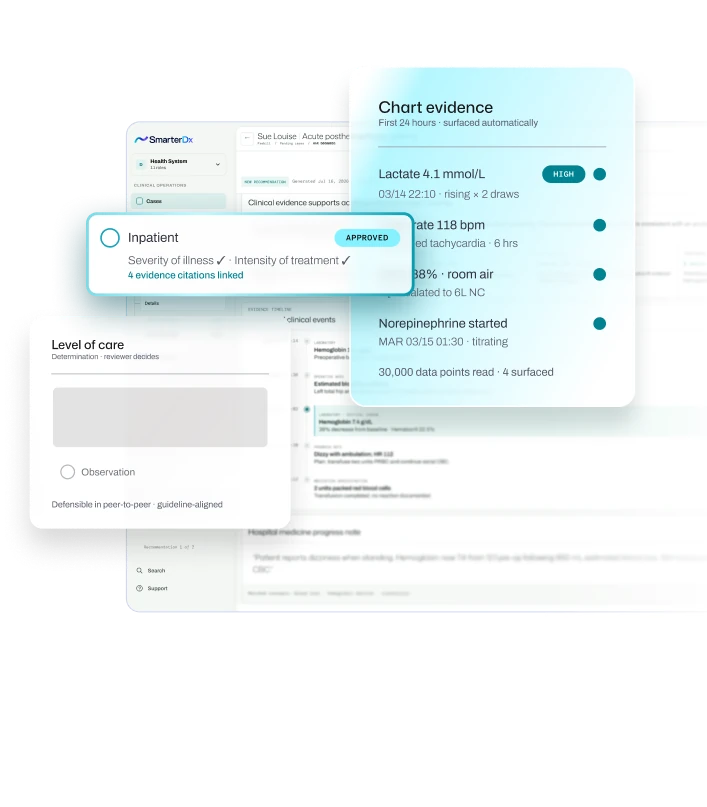
UM teams must make increasingly nuanced decisions about medical necessity, level of care, and status accuracy.
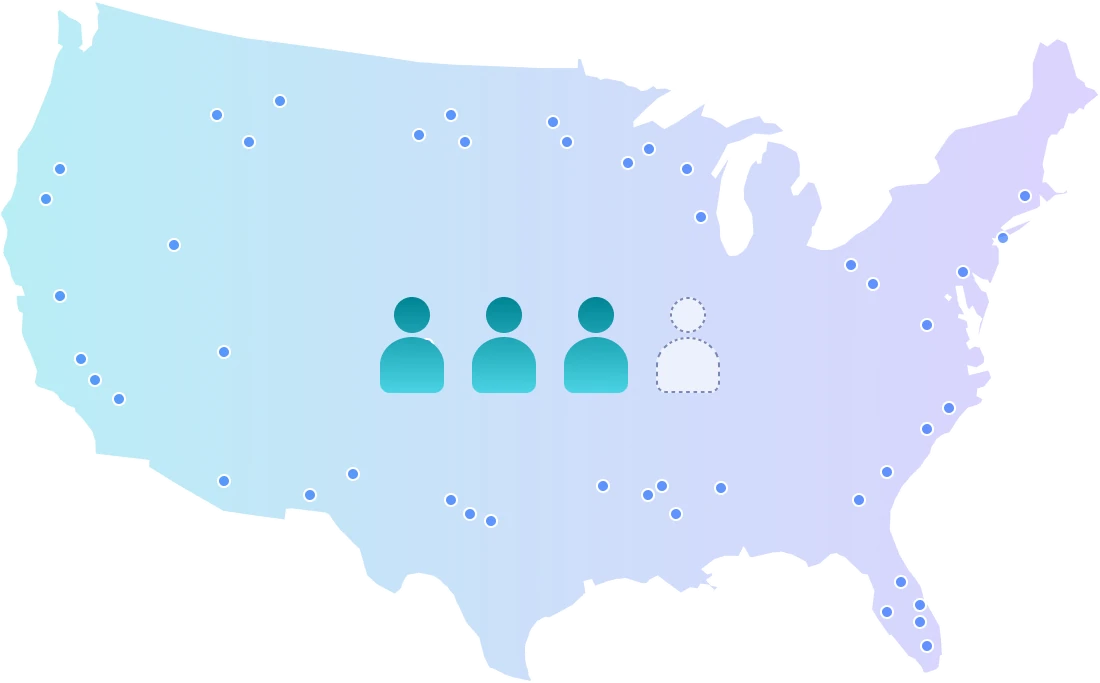
Three in four³ people in the US have at least one chronic disease
Nearly half of them have at least two⁴
Over 10%⁴ manage multiple chronic conditions
Resulting in greater administrative burden, slower reviews, and less time for high-value clinical judgment.

8+ hours⁵
Median time needed for nurses to complete one prior authorization request

13 hours/week⁵
Additional time spent by physicians to manage prior authorization work

$34,000⁵
Annual cost per physician: $34,000 plus 700 hours wasted on administrative tasks

Change the status quo with

Teams using SmarterUtilization™ report meaningful gains in efficiency and confidence.
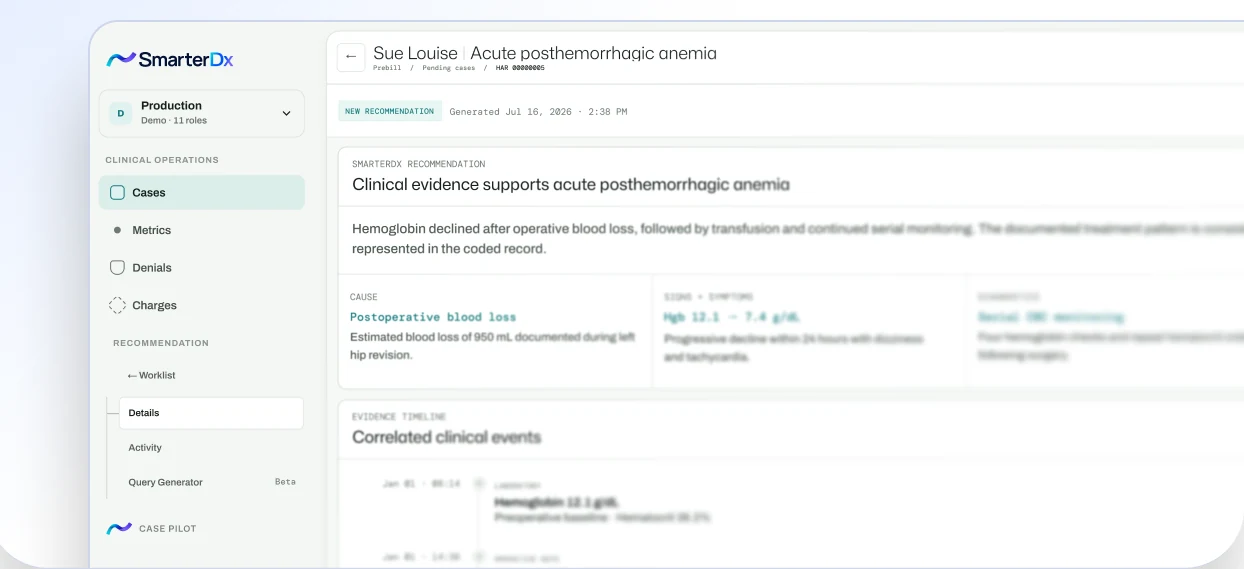
As demand for utilization management (UM) grows, health system leaders can support these teams with the same tool that helps optimize revenue cycle management — clinical AI. And, when applying an AI-first approach to UM, health systems create proactive processes where reactive reviews once stood.
42%
less time spent on chart review
31%
reduction in cognitive burden from administrative tasks
43K+
clinical AI summaries reviewed by board-certified physicians
Contact us
Ready to learn more? Get in touch with us today and we’ll set you on the path to revenue integrity.
References