


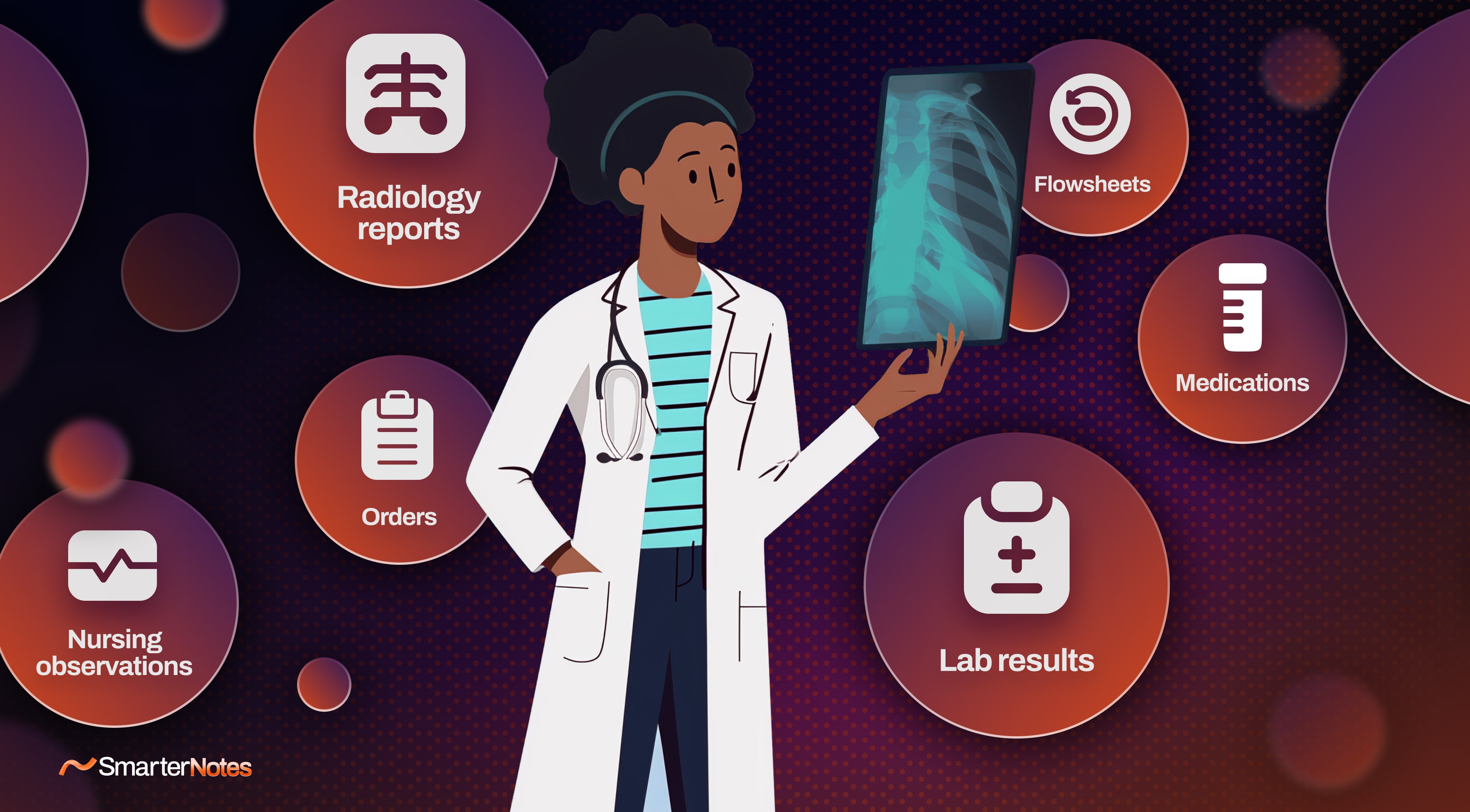
We’ve come a long way from bulky manila folders in the world of physician notes. With today’s technology, many hospitals are embracing transcription tools to capture the conversation between patients and physicians. And yet, for inpatient visits much of the provider’s care story can be found in documents: things like procedures, labs, orders, medications, tests, and more.
That’s where dynamic documentation comes in, and it’s transforming the provider experience and the billing experience. Dynamic documentation means both what is and isn’t said makes it into the note seamlessly, ensuring an accurate receipt of care provided to get paid accurately. Check out these five ways that dynamic documentation can help your health system reduce physician burnout, maximize revenue, and streamline the note writing process.
1. Reduce physician documentation time and burnout
Let’s face it…many physicians are burnt out. Pajama-time documentation eats into after-work hours causing added stress, long hours, and eating into personal time. But ambient and AI-powered solutions are giving them time back to focus on the reason they signed up to be a physician: patient care.
Dynamic documentation solutions are helping physicians capture clinical notes in real time, freeing providers from tedious manual entry and shortening documentation hours per shift. That means clinicians get valuable time back, all while dynamic documentation helps reduce burnout.
2. Lower coding queries and claim denials
Why jump through dozens of hoops when you could get it right the first time? Dynamic documentation ensures accurate, compliant note creation from the start. By aligning documentation with the billing side of the revenue cycle, organizations see fewer downstream coding queries and payer denials. This in turn accelerates and improves billing accuracy and minimizes administrative headaches. That’s what we call a win-win!
3. Improve provider satisfaction and workflow
Modern platforms integrate smoothly into provider workflows, letting clinicians focus on patient care rather than paperwork. Providers report increased job satisfaction when administrative “pajama time” is reduced through intelligent, voice-driven note capture.
4. Enhance data quality and interoperability
Dynamic documentation standardizes and structures data from the patient encounter. When physicians have all of the details laid out in an organized manner, it helps boost clinical decision making and fosters clearer communication between care teams. It ensures the EHR contains actionable, high-integrity information for all downstream needs.
5. Accelerate financial outcomes
Last but certainly not least, hospitals across the country are struggling financially. Every dollar counts with thin margins, staffing shortages, rising costs, and more.
By connecting documentation and revenue cycle intelligence, advanced note writing solutions can help prevent missed charges, overcoding, and undercoding — meaning your hospital gets paid fairly for the care provided for stronger reimbursement and an improved bottom line. Plus, your team is still in the driver’s seat to ensure accuracy — all recommendations are based in clinical evidence and approved by your team.
Next-generation dynamic documentation empowers health systems to move beyond basic transcription, helping hospitals get paid fairly for the care provided, reducing burden on providers by decreasing documentation time, and ensuring compliance and efficiency.
We’ve come a long way from bulky manila folders in the world of physician notes. With today’s technology, many hospitals are embracing transcription tools to capture the conversation between patients and physicians. And yet, for inpatient visits much of the provider’s care story can be found in documents: things like procedures, labs, orders, medications, tests, and more.
That’s where dynamic documentation comes in, and it’s transforming the provider experience and the billing experience. Dynamic documentation means both what is and isn’t said makes it into the note seamlessly, ensuring an accurate receipt of care provided to get paid accurately. Check out these five ways that dynamic documentation can help your health system reduce physician burnout, maximize revenue, and streamline the note writing process.
1. Reduce physician documentation time and burnout
Let’s face it…many physicians are burnt out. Pajama-time documentation eats into after-work hours causing added stress, long hours, and eating into personal time. But ambient and AI-powered solutions are giving them time back to focus on the reason they signed up to be a physician: patient care.
Dynamic documentation solutions are helping physicians capture clinical notes in real time, freeing providers from tedious manual entry and shortening documentation hours per shift. That means clinicians get valuable time back, all while dynamic documentation helps reduce burnout.
2. Lower coding queries and claim denials
Why jump through dozens of hoops when you could get it right the first time? Dynamic documentation ensures accurate, compliant note creation from the start. By aligning documentation with the billing side of the revenue cycle, organizations see fewer downstream coding queries and payer denials. This in turn accelerates and improves billing accuracy and minimizes administrative headaches. That’s what we call a win-win!
3. Improve provider satisfaction and workflow
Modern platforms integrate smoothly into provider workflows, letting clinicians focus on patient care rather than paperwork. Providers report increased job satisfaction when administrative “pajama time” is reduced through intelligent, voice-driven note capture.
4. Enhance data quality and interoperability
Dynamic documentation standardizes and structures data from the patient encounter. When physicians have all of the details laid out in an organized manner, it helps boost clinical decision making and fosters clearer communication between care teams. It ensures the EHR contains actionable, high-integrity information for all downstream needs.
5. Accelerate financial outcomes
Last but certainly not least, hospitals across the country are struggling financially. Every dollar counts with thin margins, staffing shortages, rising costs, and more.
By connecting documentation and revenue cycle intelligence, advanced note writing solutions can help prevent missed charges, overcoding, and undercoding — meaning your hospital gets paid fairly for the care provided for stronger reimbursement and an improved bottom line. Plus, your team is still in the driver’s seat to ensure accuracy — all recommendations are based in clinical evidence and approved by your team.
Next-generation dynamic documentation empowers health systems to move beyond basic transcription, helping hospitals get paid fairly for the care provided, reducing burden on providers by decreasing documentation time, and ensuring compliance and efficiency.


